
Long-term rental in Montenegro works differently from most of Europe: there is no dedicated residential tenancy law, rents are not regulated, and according to local media more than 80% of tenants live without any contract at all. Everything that protects you — as a tenant or as an owner — is the text of your lease and where you signed it. Here is how to rent, or let, for a year without losing your home in June or your money in September.
How Montenegrin long-term rental differs from the rest of Europe
The essential point first: Montenegro has no housing tenancy act. The relationship between tenant and owner is governed by the general rules of the Law on Obligations (Zakon o obligacionim odnosima) — the same rules that govern any other contract.
What follows in practice:
- No rent control. An owner may raise the rent on renewal by whatever they consider right. The only limit is what your contract says.
- No statutory minimum notice period. If the contract says "termination with one month's notice", one month is what you get.
- An oral lease is legally valid but useless: you cannot apply for residency with it, nor recover a deposit through the courts.
- A sale of the property does not end the lease. The new owner steps into the landlord's position on the existing terms — this one works in your favour.
The conclusion is simple: in Montenegro the contract is not a formality but your only real protection. Anything not written into it counts as unagreed if a dispute arises.
Why the lease should be notarised
By law, notarising a lease is not mandatory — notarial form is required for transactions transferring ownership, and a lease does not create ownership. But notarisation is precisely what delivers the protection people take this step for.
What notarisation actually gives you
- Direct enforcement of money claims without a lawsuit. The Law on Notaries (Art. 54) provides that a notarial record is an enforcement instrument where the transaction concerns payment of a specified sum of money and the debtor has consented to enforcement without delay. In practice, unpaid rent or utility debt goes straight to the bailiff, skipping litigation — and Montenegrin court proceedings are slow.
- Fixed terms. The date, duration, rent and deposit are locked and cannot be rewritten retroactively. No "it's 800 from June because it's the season".
- Acceptance by the Ministry of Interior. A notarised lease is what is accepted when applying for a residence permit.
Montesa Group concludes only notarised long-term lease agreements. This is a matter of principle: such a contract protects both sides of the transaction — the tenant gets certainty that they will not be pushed out before the season, and the owner gets a working enforcement mechanism if the tenant stops paying.
Why some owners refuse to go to a notary
Worth stating plainly, because it is usually left unsaid. A notarised lease makes rental income visible to the Tax Administration. An owner who offers a receipt or a handshake instead of a contract is usually saving on tax — and you pay for it: without a contract there is no residence permit, no deposit recovery, no protection against eviction.
If a landlord refuses notarisation, treat it as a signal rather than a detail. Either negotiate a premium for proper documentation, or find another property.
Seasonality: the single most valuable thing to know
This is the section worth reading the article for. The Montenegrin coast runs on two price levels, and the gap between them is measured in tens of percent.
How the market moves through the year
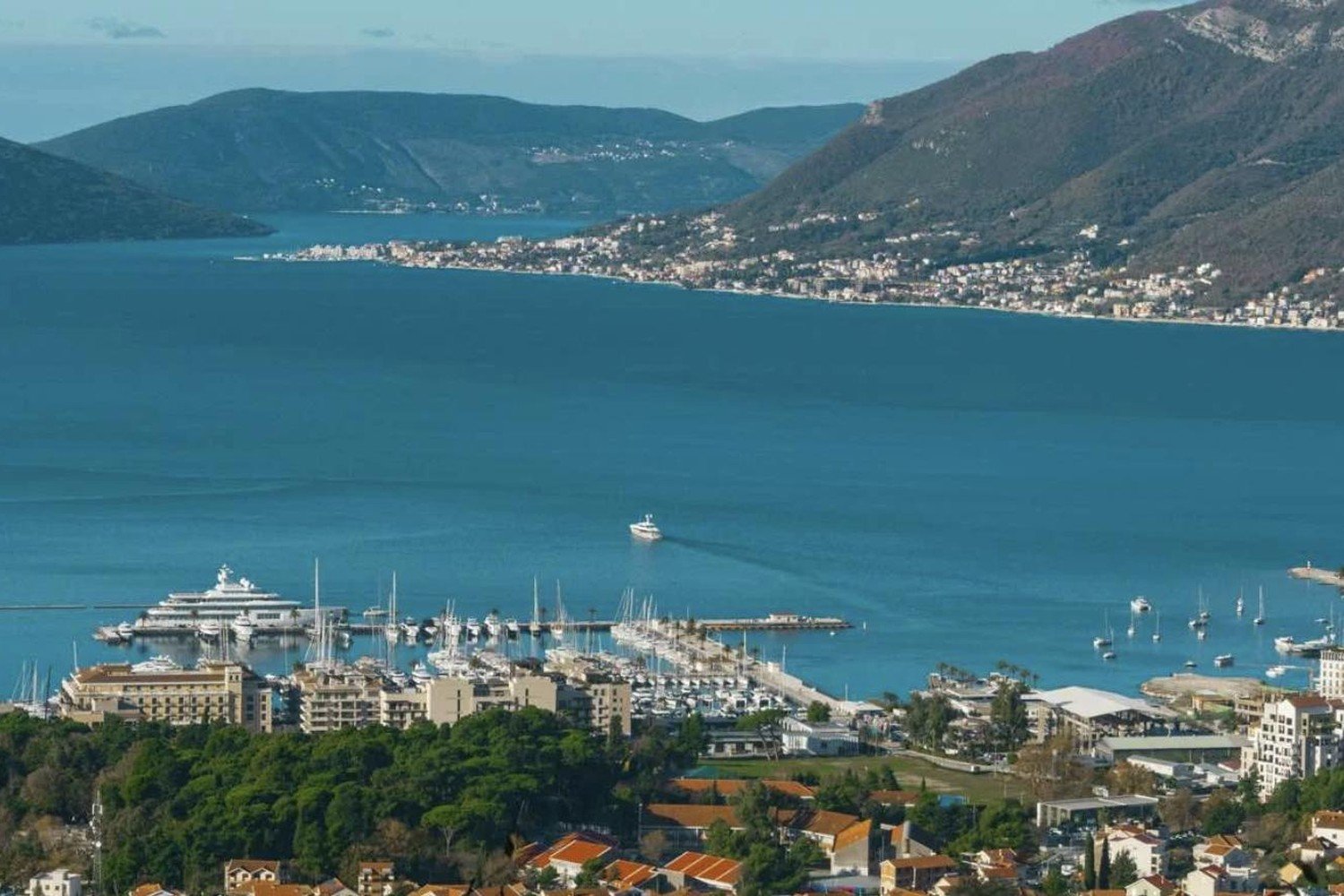
The genuine high season on the coast is short — roughly 40 to 45 days across July and August. But preparation starts in spring, and that is exactly when the long-term market dries up. An owner who can let daily through July and August has no interest in committing the flat for a year at an annual rate.
- September to December: the best window. The season is over, daily demand has collapsed, flats stand empty. Owners want a reliable year-round tenant and will negotiate — on price, on deposit, on terms.
- January to March: conditions still reasonable, but the choice is thinner — the best stock went in autumn.
- April to June: the worst time. Owners hold properties back for the season, annual offers are scarce, prices are higher and prepayment demands tighten sharply.
Why prepayment of the final months is demanded closer to summer
This is not greed or rumour — there is a clear logic behind it, and both sides benefit from understanding it.
Picture an owner who lets a flat in May on an annual contract. The tenant lives there comfortably through July and August — precisely the two months when the property could earn several times more — and moves out in September. The owner received an annual rate for the most valuable period and is left with an empty flat in the dead season. The loss is obvious.
The defence against this is non-refundable prepayment of the last months of the lease. If the tenant terminates early, that money stays with the owner and compensates the lost season. So the closer to summer you enter the market, the more months you will be asked for in advance: first month, deposit, plus two or three final months. In spring, demands of five months or more have been recorded.
The conclusion is straightforward: enter the market in autumn. You lock the off-season rate for all twelve months, July and August included, and prepayment demands will be markedly softer.
The contract clause that gets people evicted in May
The mechanism behind every "summer eviction" is the same — the owner's right to terminate on one month's notice. Notice arrives in April, you move out in May, and the flat goes daily in June.
Check this clause before signing. The contract should either contain no owner right of early termination absent fault on your side, or serious compensation for exercising it. If the landlord will not put that in writing, you are renting until May regardless of what the term field says.
What long-term rental costs in Montenegro
Benchmarks for the 2026 market. These are asking prices — in practice there is almost always room to negotiate, especially out of season.
- Podgorica — one-bedroom roughly €320–600, two-bedroom €550–1,100. The capital is season-independent, with steady rates year-round.
- Budva — one-bedroom €500–950, two-bedroom €750–1,400. The most pronounced seasonality on the coast.
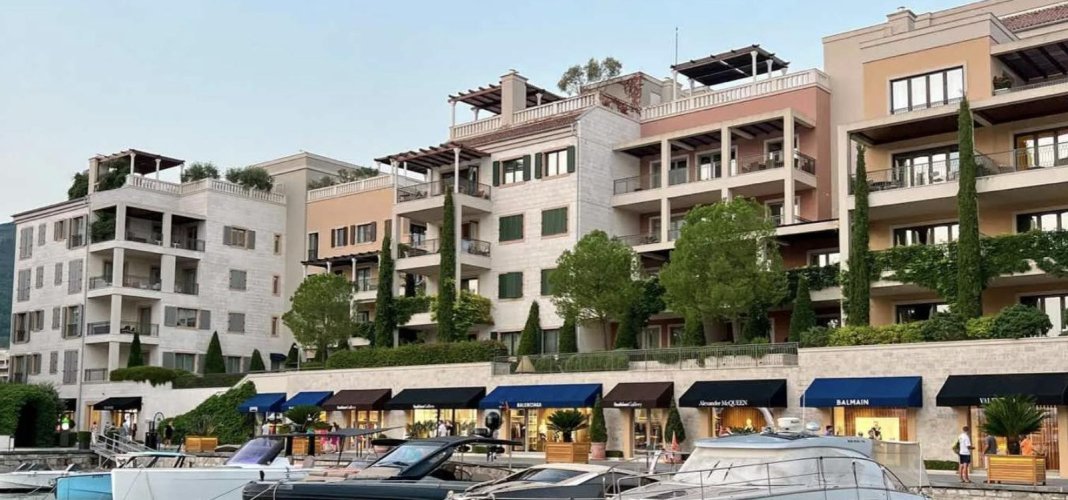
- Tivat — one-bedroom €700–1,000, two-bedroom €900–1,800. Porto Montenegro sits in a different bracket entirely.
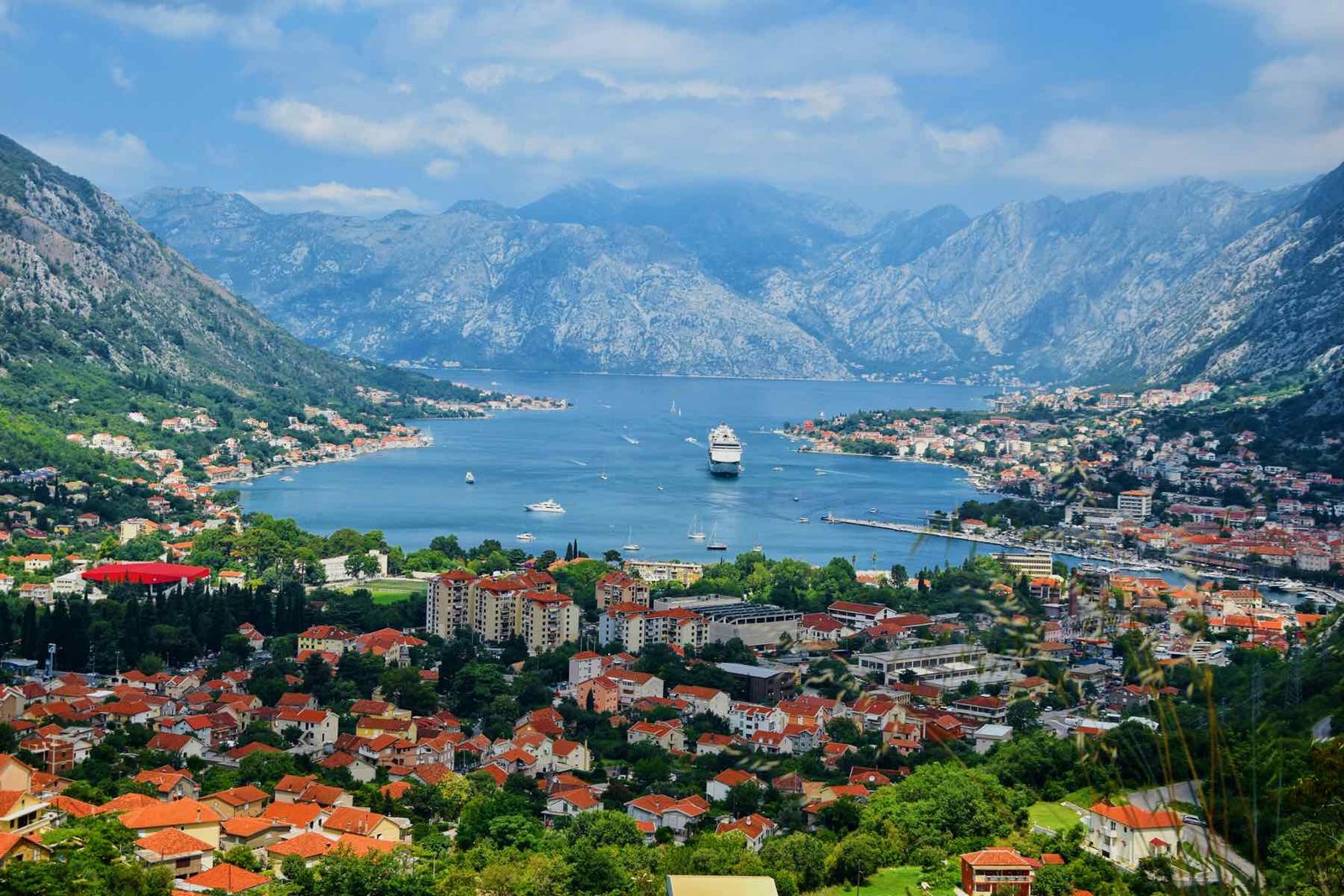
- Kotor — one-bedroom €450–950, two-bedroom €800–1,400. Wide spread by district: Dobrota and Škaljari run well above the outskirts.
- Herceg Novi — one-bedroom €400–700, two-bedroom €500–950.
- Bar — one-bedroom €550–700, two-bedroom €600–900.
The national average sits around €700 per month. In 2026 the coast went through a correction: local agents put the fall at 15–20%, driven by increased supply and the departure of part of the foreign tenant base. For anyone searching now, that is an unusual window.
What the advertised rent does not include
Listed prices are almost always quoted net of utilities. Budget separately for:
- Electricity — €60–80 in summer, €100–150 in winter. The difference is heating: coastal housing was built for July and is often poorly insulated.
- Water and waste collection — €15–25.
- Internet — €30–40.
- Building maintenance (upravnik) in newer complexes — €30 to €120 per month, higher where there is a pool.
For an 85 m² flat that comes to roughly €115–280 per month on top of rent in winter. The winter electricity bill is the most common unpleasant surprise for anyone who arrived in summer.
The lease and your residence permit
For many tenants this is the whole reason to do things properly.
The rules on granting temporary residence expressly list a residential lease agreement among the documents proving secured accommodation. Formally the wording is simply "a concluded lease agreement" — with no mention of a notary.
In practice the Ministry of Interior asks for more: a notarised lease with a 12-month term, plus the owner's cadastral extract (list nepokretnosti) for the property. Documents are generally expected to be recent — no older than six months.
This is why a verbal arrangement, or a lease on a plain sheet of paper, voids your residency application no matter how much rent you pay. A notarised lease agreement is an integral part of the residence permit document package.
Separately: address registration (bijeli karton) is mandatory, and without it the residency application stalls — the authority checks whether you registered your stay. Agree in advance with the owner who will handle it and when.
Owner taxation on long-term letting
This section is for those letting property. Most market guides stop at half the truth here.
- Tax on income from property: 15%.
- Standard expense deduction: 30% of gross income with no supporting documents required. Actual documented expenses may be claimed instead.
- Effective rate: 10.5% of gross rent (15% of 70%).
- Plus municipal surtax (prirez) — up to 13% of the calculated tax, and up to 15% in Podgorica and Cetinje. This is the line almost everyone omits: the real burden is not 10.5% but roughly 11.9–12.1% of gross rent.
- The GPP-FL return is filed by 30 April for the previous calendar year. Where the tenant is a legal entity, tax is withheld at source.
- Penalties for failure to file or pay run from €500 to €2,000 for individuals.
An important distinction: long-term letting and daily tourist rental are two different regimes. Daily letting to tourists requires categorisation of the property and entry in the Central Tourist Registry, plus collection and remittance of the tourist tax. Letting without categorisation carries fines of €200 to €2,000 for individuals.
Meanwhile, no tourist tax is due for a long-term tenant: continuous stays over 30 days are exempt. Address registration still applies.
Lease checklist
- Precise identification of the property — cadastral data from the list nepokretnosti, not just a street address.
- Confirmation that the signatory is the owner or holds a power of attorney.
- Term and start date.
- Amount, currency, payment date and payment method.
- Deposit amount and the conditions for its return — stated specifically, not "by agreement".
- Who pays electricity, water, waste, internet and building maintenance.
- Notice periods for termination — for both parties.
- Whether the owner has any right of early termination.
- Terms of any prepayment of final months and what happens to it on early departure.
- Handover protocol with an inventory of furniture and appliances and meter readings.
- Confirmation that the previous tenant left no utility arrears.
- Who registers your address, and within what deadline.
- Terms on pets, subletting, repairs and minor maintenance.
Common tenant mistakes
- Accepting a verbal arrangement to save money. €50 a month cheaper — and no residency, no deposit, no protection.
- Not reading the early termination clause. The classic May eviction scenario.
- Searching in April to June. The worst entry conditions of the year.
- Not recording meter readings at move-in — and inheriting someone else's debt.
- Budgeting from summer utility bills. They roughly double in winter.
- Handing over prepayment before signing. Money changes hands only after signing at the notary.
- Using an unregistered agency. Since 2025 Montenegro has a law on mediation in the sale and lease of real estate: an agency must be entered in the public registry of mediators, employ a certified agent and carry professional liability insurance. Check the registration number — it must appear in the listing.
Why rent through Montesa Group
We have worked in the Montenegrin property market for almost 20 years and have kept our finger on the pulse of legislative and regulatory change throughout. The rules have shifted more than once over two decades — from categorisation requirements to residency conditions — and we track each change through transactions, not headlines.
- Notarised long-term contracts only. We do not arrange rentals on trust: a notarised lease protects both sides of the transaction and is recognised by the authorities.
- A lease that works for residency. We prepare the package so it passes at the Ministry: correct term, correct form, cadastral extract from the owner.
- Owner and property verification. Title, encumbrances, absence of utility arrears, valid use permit.
- Protection against the summer eviction. We negotiate early termination terms explicitly and do not allow one-sided loopholes timed to the season.
- The right timing. We will tell you when to enter the market and what terms are realistic in any given month.
- Support after move-in. Address registration, dealing with the owner, help at renewal.
- Compliance with the 2025 mediation law — registered, with certified agents and liability insurance.
Request a free consultation — we will shortlist options for your budget and timeline, explain the realistic entry terms for the current month, and handle the paperwork.
Frequently asked questions
Is a written lease mandatory in Montenegro?
An oral lease is legally valid, but a written one is required for a residency application, for the owner's tax reporting, and as evidence in court.
Does the lease need to be notarised?
Not by law. In practice, yes: notarisation allows debt recovery without litigation and is what the Ministry of Interior expects for a residence permit.
When is the best time to look for an annual rental?
September to December. You lock the off-season rate for all twelve months and face the mildest prepayment demands.
Why am I asked to prepay the final months?
It protects the owner against early departure after the high season. The closer to summer the contract is signed, the more months will be requested.
What deposit is normal?
One month is standard; two months is common on the coast and for higher-end properties.
Can a lease be used for a residence permit?
Yes — a lease agreement is expressly listed among documents proving secured accommodation. In practice a notarised 12-month lease and the property's cadastral extract are required.
What tax does an owner pay on long-term letting?
15% on 70% of gross income, i.e. 10.5%, plus municipal surtax — around 11.9–12.1% in total. The return is filed by 30 April.
Does a long-term tenant pay tourist tax?
No. Continuous stays over 30 days are exempt, though address registration still applies.
Long-term rental in Montenegro rewards not whoever finds the listing first, but whoever enters the market at the right moment with a properly drafted contract. If what you need is not a year on land but a season on the water, see our guide to yacht charter in Montenegro: routes around the Bay of Kotor and the Budva Riviera, marinas, the season and how pricing works. This article is current as of 2026 and is for general guidance; contact us for property selection and to handle the paperwork.